Good product discovery includes the customer throughout the decision-making process. Engaging with customers early and often in the process helps ensure that the product being developed will address real user needs and provide value. Techniques like interviews, surveys, and usability testing are commonly used to gather insights directly from the target audience.
Marty Cagan describes that Product Discovery aims to mitigate four primary risks before development begins:
Several techniques and tools can guide the product discovery process. Here are a few examples:
Product discovery is most effective when conducted by cross-functional teams, often called the "product trio": the product manager, designer (UI and UX), and engineer. This collaborative approach ensures that different perspectives are considered, leading to valuable and innovative solutions. While product managers and designers typically spend more time on discovery, engineers must be involved in assessing feasibility and contributing to creative problem-solving.
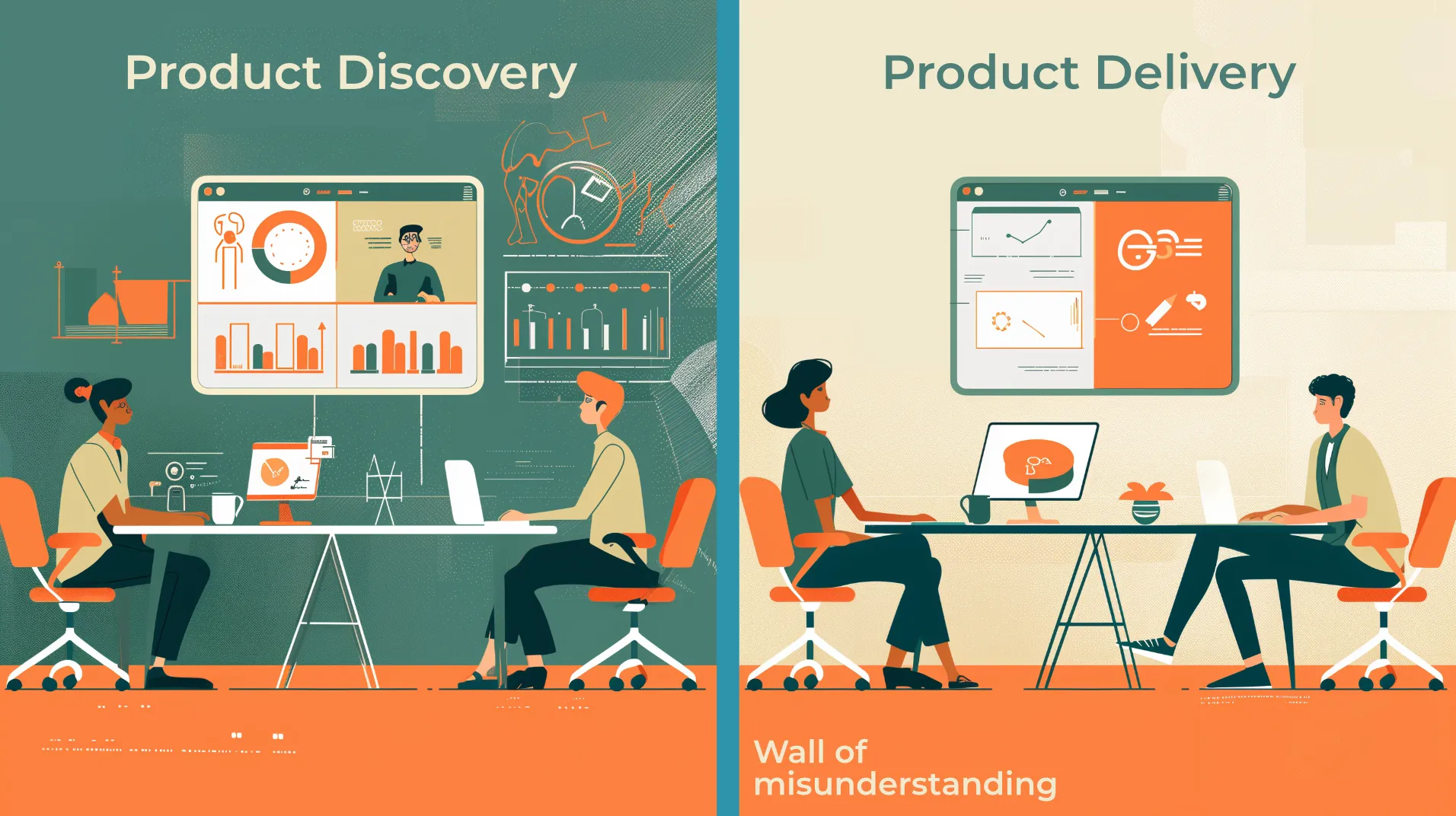
Separating Discovery and Delivery Teams: Building successful products is an iterative process. By splitting these responsibilities, neither is responsible for the final product because they didn't build it or weren't part of defining the solution. The value is bringing together all the skills and knowledge and building the product.
Founder-Driven Solutions: All too often, founders or management still need to decide which solutions to build without being involved in the discovery process. Not knowing the problem or possible solutions can make this a dangerous and expensive decision. To prevent this, engage with these important stakeholders during the discovery process so that informed decisions can be made.
Blaming Lack of Demand Based on a Poor Solution: A poorly executed solution can mistakenly be seen as a lack of demand. There was music before Spotify, movies before Netflix and search engines before Google, yet they found demand where nobody else found it with their product. Validate the problem thoroughly and iterate on the solution to ensure it meets customer needs.
There is no one formula for Product Discovery. However, to provide some guidance, we will use the Double Diamond framework, which divides the process into four distinct phases: Discover, Define, Develop, and Deliver. This framework helps our brain structure innovation's chaotic nature by clearly segmenting the phases of discovering and defining the problem and then developing and delivering the solution. But please remember that reality is more dynamic and less linear.
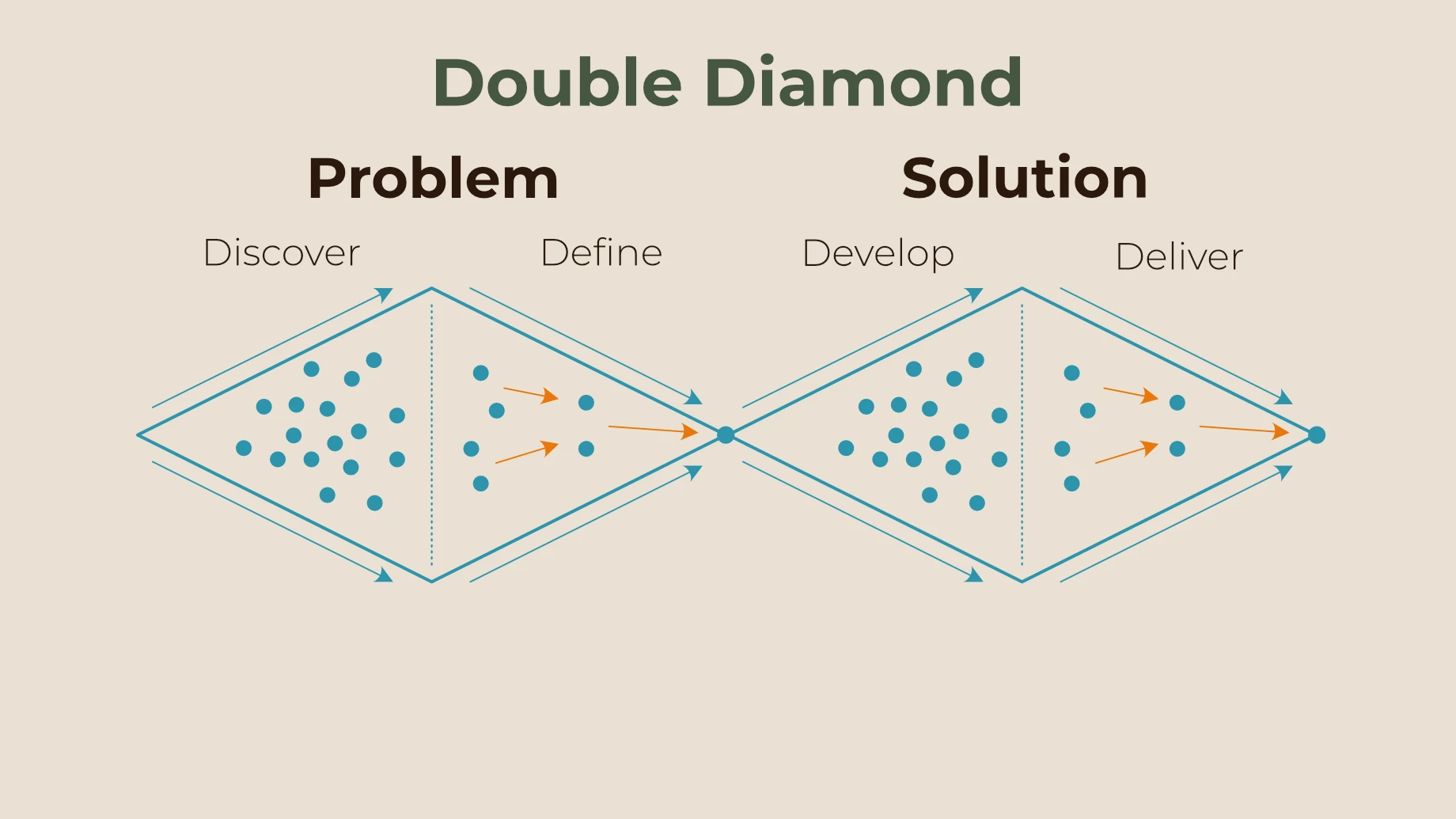
The first phase, Discover, involves immersing the team in the user's world to gather rich insights. The team seeks to uncover the users' real challenges and needs through user interviews, observational studies, and data analysis. This phase is crucial for building a solid foundation of user understanding, which informs all subsequent design decisions.
In the Define phase, the team articulates the user's problems based on the insights gathered during the Discover phase. Activities like empathy mapping help translate user data into actionable insights, culminating in a clear problem statement. This statement defines the team's challenge in the following phases, ensuring that solutions are targeted and relevant.
The development phase is where solutions are created and prototyped. It uses creative brainstorming techniques like SCAMPER or User Story Mapping to generate various ideas. Early-stage prototypes are then built to bring these ideas to life, allowing for quick, iterative testing and refinement based on initial feedback.
The delivery phase in the Double Diamond framework represents the transition from Product Discovery to Product Delivery. It begins with an MVP or prototypes and evolves to more refined versions that incorporate user feedback continuously. This phase blurs the line between discovery and delivery, gradually shifting from exploring and testing potential solutions to formalising and scaling them. As the solution matures and testing moves through alpha and beta testing, the focus is on refining and expanding the product's reach and impact. It can still happen that insights in these later stages show that the team has to return to the drawing table.
A term coined by Teresa Torres is Continuous Discovery. She says this is "Weekly touch-points with the customer by the team building the product, where they conduct small research activities to pursue a product outcome." She also wrote a book about it, which is worth reading; you can find the link below.