Kanban is a visual project management method that streamlines work by displaying tasks on a Kanban board divided into stages like "To Do," "In Progress," and "Done." Originating in Toyota's manufacturing processes, it has evolved into a vital tool across various industries, particularly Agile software development. Kanban cards represent tasks, moving across the board to illustrate progress and immediately highlight bottlenecks. This method enhances decision-making, increases transparency, and improves productivity by limiting work in progress and focusing on continuous delivery.
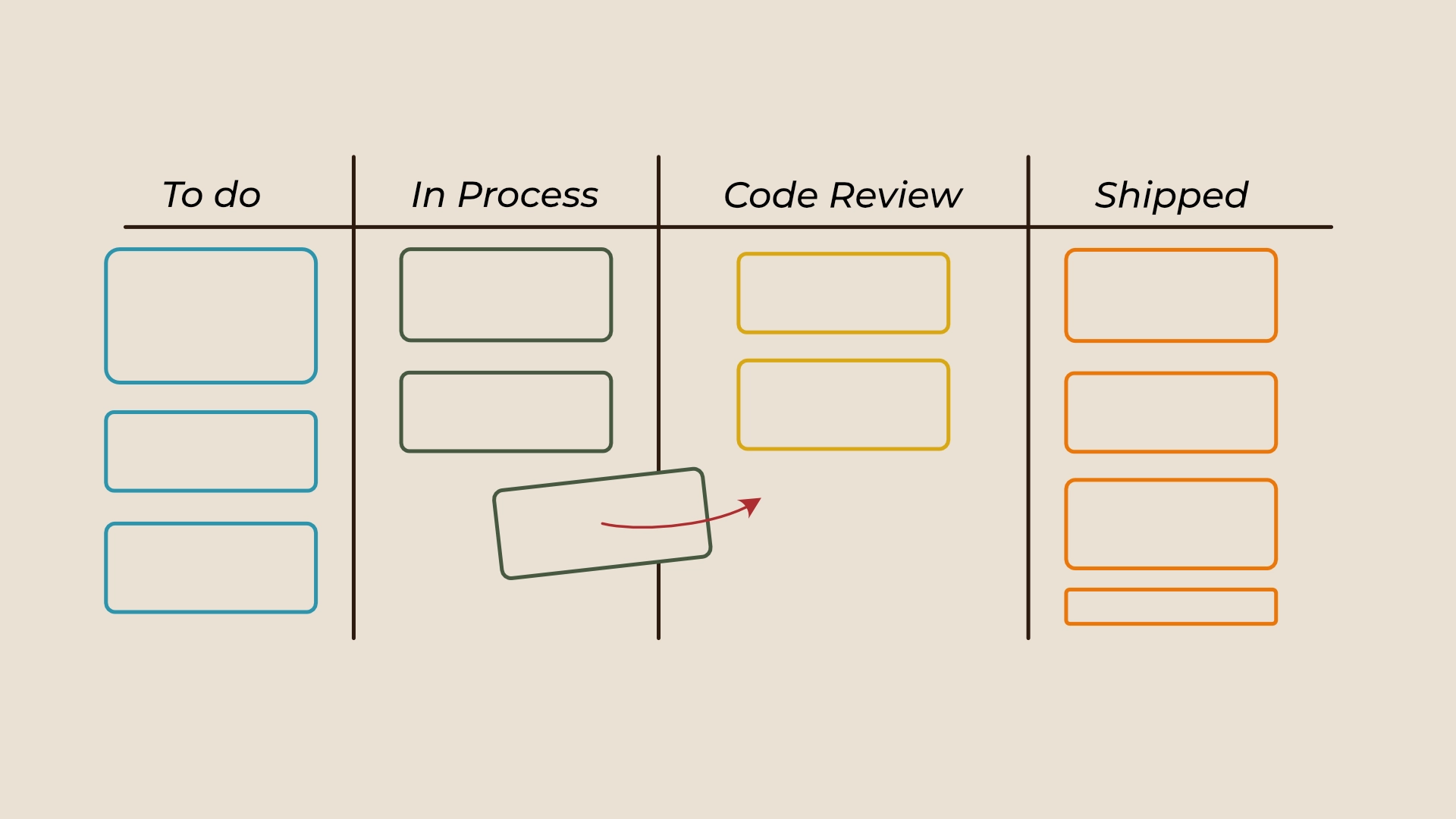
The Kanban board is the central feature of this methodology. It visually represents the workflow and is typically divided into columns such as "To Do," "In Progress," and "Done." Each column represents a stage of the workflow, allowing teams to see the state of every task at a glance. Boards can be physical, with cards moved manually, or digital, using tools like Trello or Jira.
Each task or work in the Kanban system is represented by a card that moves from one column to the next as the work progresses. These cards include the task description, who is responsible, and any due dates or associated notes. Their visibility helps prevent tasks from being overlooked and makes priorities clear to the entire team.
WIP limits are a critical component of Kanban, set to ensure that teams do not overcommit to too many tasks at once. Limiting work in progress helps teams focus on completing tasks before starting new ones, thereby reducing the time it takes to complete each task and helping to identify bottlenecks in the process.
One of Kanban's primary goals is to achieve a continuous flow of work, where tasks move steadily through the workflow without long delays or blockages. This steady flow is maintained by managing WIP limits and ensuring that each workflow stage is balanced regarding capacity and demand.
Regular meetings and feedback sessions are part of Kanban, allowing teams to discuss the board's current state, review workflow processes, and adjust as needed. These feedback mechanisms are vital for continuous improvement and help teams adapt to changing priorities or project requirements.
The Kanban board should reflect the specific stages of the team's workflow. While many teams start with basic columns like "To Do," "In Progress," and "Done," they can customise this setup to suit their processes better. For instance, a software development team might include columns such as "Design," "Code Review," and "Testing" to capture all necessary steps in their workflow. Each column is then defined with specific criteria that a task must meet to move to the next stage, making progress measurable and transparent.
Tasks on a Kanban board are represented by cards that can vary significantly in detail depending on the project's complexity. Each card includes key information such as task description, due dates, assignees, and any dependencies or links to other tasks. This ensures that team members have all the necessary details to take ownership of tasks without searching for information.
Work In Progress (WIP) limits are crucial for maintaining a balanced workflow. Teams may set different WIP limits for various stages based on typical throughput and the complexity of tasks in each column. For example, a "Testing" column might have a higher WIP limit if testing is quicker than the "Code Review" stage, which could be a bottleneck due to its rigorous demands.
As tasks progress, team members move Kanban cards from left to right across the board as tasks progress. This mechanical movement involves constant evaluation of the task’s status and dependencies. If a task is blocked, it's flagged or moved to a specific "Blocked" column with notes on what is required to resume work. This practice helps address impediments quickly and maintain continuous flow.
Regular analysis of the Kanban board allows teams to identify patterns and recurring bottlenecks. This ongoing review leads to iterative adjustments in the workflow, WIP limits, and even the board's layout. For example, if specific tasks consistently stall in the "Code Review" column, the team might decide to implement pair programming to speed up this stage.
In environments where continuous delivery is critical, Kanban helps manage and expedite work from ideation to delivery. Teams can integrate CI/CD tools with their Kanban boards to automate parts of the workflow, such as moving tasks to "Done" when deployment is successful, enhancing both speed and accuracy in project completions.
Kanban is distinguished by its emphasis on continuous delivery without the predefined iterations typical in Scrum. While Scrum organises work into sprints, Kanban focuses on maximising the flow of tasks, using visual cues and WIP limits to manage workload and throughput continuously.
Teams can determine WIP limits based on several factors, like their capacity, past performance, and the complexity of tasks. WIP limits are set to ensure that work flows smoothly without significant bottlenecks, and they are often adjusted as teams refine their processes and better understand their capabilities.
Yes, Kanban is highly versatile and can be integrated with other methodologies, including Scrum. This hybrid approach, often referred to as Scrumban, combines the structured sprint framework of Scrum with the flexible workflow management of Kanban, allowing teams to benefit from both methods.
Visualising work processes in Kanban provides clear visibility of the project’s progress and immediate insights into potential bottlenecks or delays. It facilitates quicker decision-making, enhances team communication, and supports better resource allocation by making the status of tasks clear and transparent to all team members.
Have you stumbled upon a blunder? Maybe a typo, a broken link, or just something out of tune? Point it out in the box below and press ‘Send’ to help me smooth it out in no time!